Unknown's avatar

About mariabitarello

Unprofessional artist

Pas de Deux

Life companions, by Maria Bitarello

We get off to a bad start this morning when the running shower wakes him up, and as he passes me in the kitchen, an abrupt arm motion makes his frustrations noticeable. The door slams against the wall. I immediately feel like apologizing. Instead, I go downstairs to our neighborhood bakery for some fresh croissants and hope he’ll appreciate the gesture. Croissants are his thing. And I came to love them too.

I come back home and decide not to apologize. What would I be apologizing for? The shower? Or for reheating tea, which he finds disgusting? Or, better yet, for telling him the other day: “It’s a cute shirt, but did you know that’s a woman’s brand”?  Not today. I should save the words for when I really mean them and not because I fear his reaction, which, to my own surprise, I no longer do. As I rinse the cereal bowl, the kettle starts to whistle, and I let the house chores take over our silent confrontation. Every day, couples like ourselves perform a private pas de deux in their homes, hidden from an audience. Deprived of spectators, we let the little things take over.

The shower starts running in the bathroom, for the second time this morning, and I grimace at the teacups I’m placing in the cupboard, the only witnesses to this debauch. Their silence comforts me and I laugh to myself. I hear splashing sounds in the shower, and secretly hope there’s enough hot water in the boiler to avoid any more disagreements. I go back into the bedroom to make the bed and remember something he told me a few years before. “You’re the first thing on my mind when I wake up and the last one before I go to sleep, and yet you live in my dreams”. He said this to me over the phone, overseas, back when I wasn’t the first and last thing he saw, lying next to him, day in, day out. Our dreams, at the time, most often than not, revolved around being in the same time zone.

The shower stops and the curtains are bashed aside before the phone rings.

-– Hello, Joanna. He’s in the shower, but I’ll let him know you called.

I hang up and pack away my laptop and sweater. I’m setting aside both our train tickets when he shouts from the bathroom.

-– Who was that?, he asks, toneless.

-– Your mom. You should call her, I yell back, loudly yet calmly.

I remind myself that today I choose peace. It’s just past 8am and the sunbeam that usually comes in late in the morning to land on our kitchen table is already dancing over the chair, a nice warmth next to the tablecloth. Summer is here. Fresh croissants decorate the table by the fruit basket and a hot cup of tea still awaits his recognition and approval. My face denies it, but my heart… well, it used to long for it. His hair dripping from the shower, he walks back into the kitchen, phone in his hands and dialing the number. I nod, signaling the teacup. It’s the first time he glances at me this morning.

-– Hi, mom, it’s me… Yeah, I was in the shower…

He stirs his tea as I toss out the salad that’s starting to stink the fridge.

-– Ok, I’ll call you later this week, he ends the conversation, before hanging up and walking out of the kitchen.

Two hours after the phone call, we’re onboard the morning train south. As the guy with the vending cart walks by announcing plastic-tasting sandwiches, I realize I’m napping, the right side of my face leaning against the window. The music I was listening to through my headphones has ended without my consent. I look up to see him typing away on his phone, apparently unaware of my dozing off and reawakening. Some other day and I would’ve just seen unawareness, but today I admit it’s indifference.

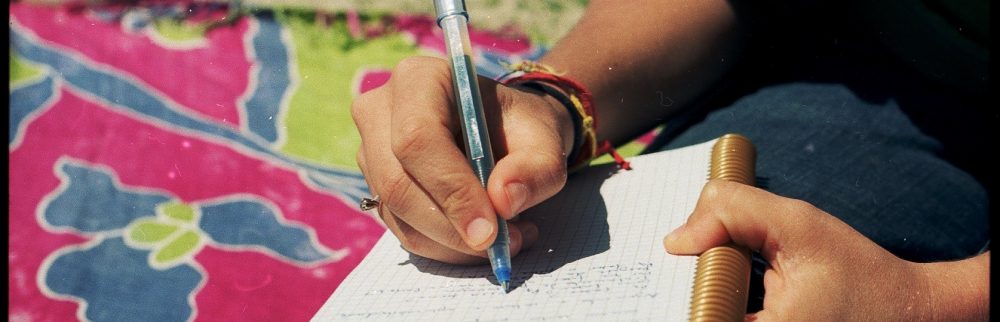
Sitting across from him, I remember the first time I realized our love was withering. We were also on the train. The memory assaults me and stirs emotions I feel like spilling out, so I pull out a notebook and start scribbling, alternating between melancholy, euphoria, anger, guilt, regret, and hope. I put on my headphones, turn the music back on and let an 80’s pop song take me elsewhere. A place where I feel beautiful and confident and strong. It’s a mindset in which I no longer care about all of this.

The ticket controller comes by our seat and makes a gist about handwriting – me – and typing – him. Something about men and women. Looking away from his phone to the controller, he seems partly amused, partly annoyed, and thus smiles politely to avoid further speculations on genre differentiation based on the use of a pen or digits. We avoid eye contact for the remainder of the trip. The pretending is too real, though: either his mind is indeed elsewhere, or he’s fascinated by doorknobs. As he sits there, wishing to go by unnoticed, I decide not to insist. Not anymore. I’ve long wanted to believe there are alternatives to separation, the non-resolution, dividing books and records, dreams and friends, sleeping alone. I used to think I needed this, but I’m letting go.

The train signals the arrival and it snaps me back from my bubble of silence and self-consciousness. Loss is not an explosion; it’s a whisper. It’s not sudden; it lingers. It’s grieving for the living. I feel myself accepting grief, and the pain gently starts to lose its grip on me.

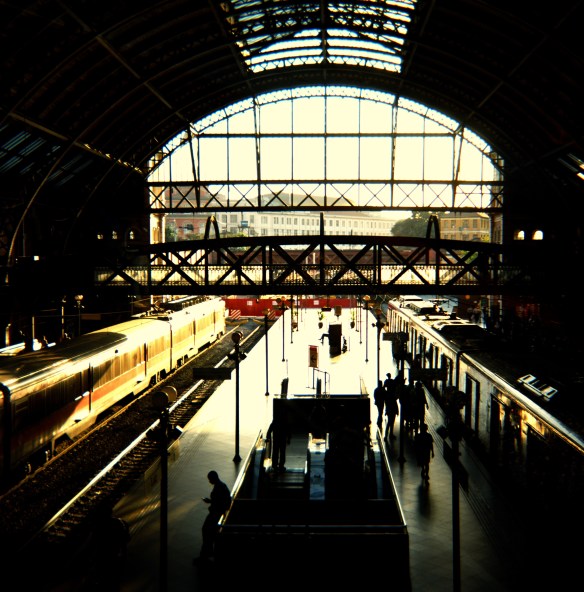
We come to a stop. I close my notebook and put it away in my bag. We step out of the train; the station clock shows 12h03 on the platform and he carries on pretending.

I don’t.

Diga-me com quem, em que e que horas andas em Los Angeles (2008)

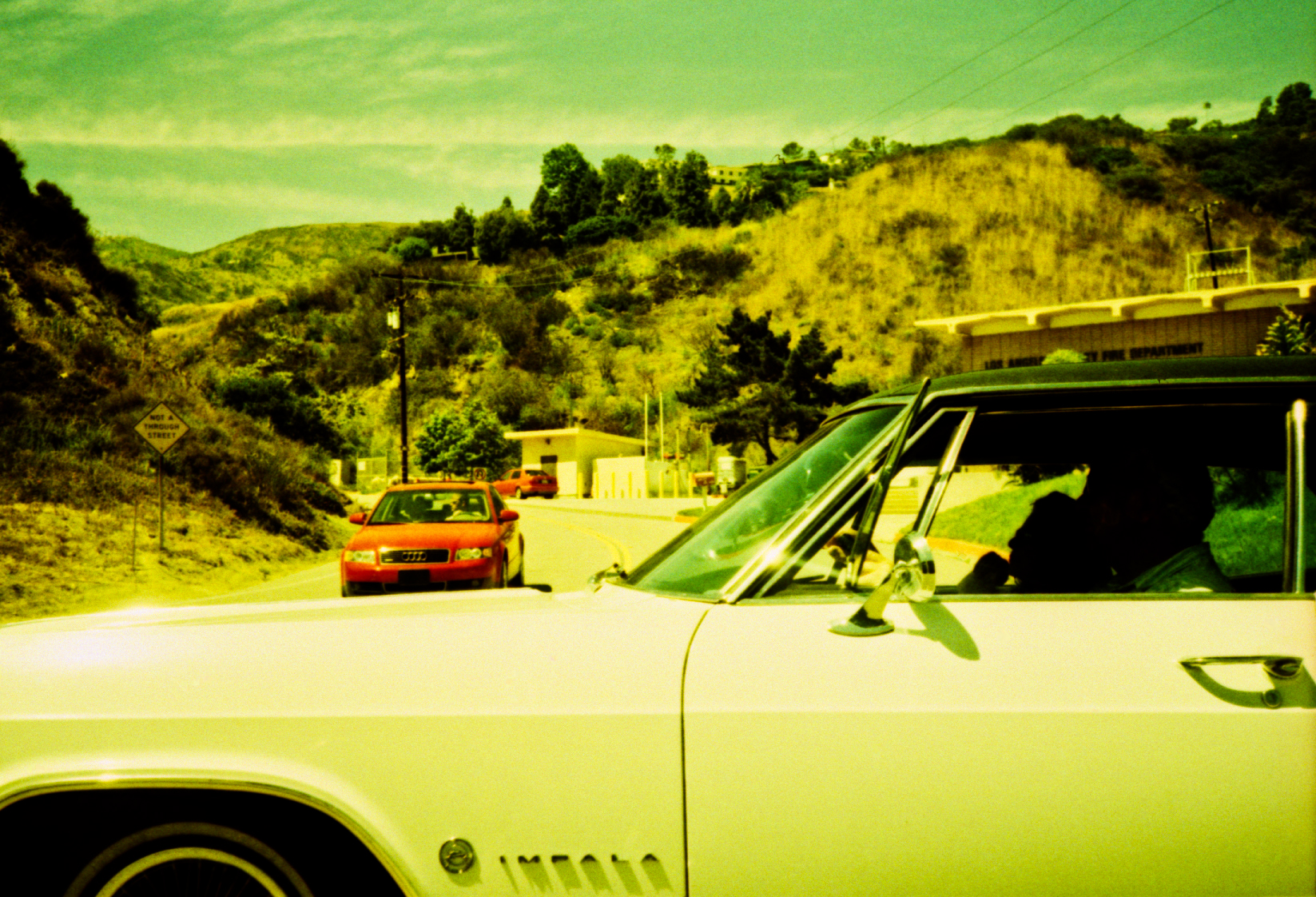
Ford Impala @ Topanga Canyon
(by Fábio Nascimento)

Uma vez vi o sociólogo Roberto da Matta falando sobre a sociologia por trás do comportamento dos motoristas. Ele falava da nossa agressividade no volante, do sentimento de poder dentro daquela máquina blindada, de como só brasileiro mesmo que acelera o carro quando vê um sinal amarelo e um pedestre ameaçando pisar a faixa listrada. Achei a analogia muito boa e, quando saí dali, passei imediatamente a reparar no meu comportamento, e no dos demais, quando dentro de nossos veículos. E isso ficou comigo.

Agora vivo em Los Angeles, onde as leis de trânsito são semelhantes, mas o pathos por trás da analogia de Roberto da Matta é completamente diferente. Diga-me com quem andas que eu te direi quem és, assim segue o ditado. Em dialeto “angeleno” (o habitante de Los Angeles), adaptamos para diga-me em que andas que eu te direi quem és. Em pouco tempo aqui, me lembrei também da observação do personagem interpretado por Don Cheadle do filme “Crash”, de Paul Haggis e vencedor do Oscar, sobre o transporte público: os ônibus, à noite, andam com as luzes internas acesas, segundo o cara do filme, para humilhar quem anda dentro e expor o negro, o latino, o imigrante, o pobre, a mulher, a minoria.

Na época, embora conhecesse bem a segregação racial nos Estados Unidos, achei curioso. Os países europeus se orgulham de seus sistemas de transportes públicos. Não ter um carro em Londres ou Paris não é uma vergonha, é um luxo. Significa que você vive em uma cidade onde o serviço de transportes tem qualidade, segurança e cobertura. Você não se preocupa com seguro do carro, estacionamento, dirigir embriagado, manutenção – que libertação. O Brasil se diz apaixonado por carros, mas também tem seu pé europeu: na hora de alugar um imóvel, pesa muito a distância da estação de metrô ou do ponto de ônibus.

À exceção de Nova York, os Estados Unidos são uma terra de carros. A cultura automobilística é fortíssima. Mas nunca havia visto nada parecido com Los Angeles. Para começar, o metrô é uma piada, pior que o do Rio antes de ser expandido. E Los Angeles, me permito a comparação, é tipo Brasília. Um lugar visivelmente diferente do resto do país e que divide as opiniões com veemência: os que amam e os que detestam. E os carros têm papel importantíssimo nessas reações.

Com freqüência os amigos do Brasil me perguntam se moro perto da praia. Normal, afinal faz parte do imaginário da cidade das estrelas: Malibu, “Garota eu vou para a Califórnia”, e por aí vai. Respondo com dúvida. Em termos brasileiros, estou longe, pelo menos 20 minutos de carro (sem trânsito), nem sei calcular a que distância a pé. Em escala americana/angelena, vivo à beira mar. Para entender, olhe um mapa da área metropolitana da cidade e veja sua extensão. Uma linha imaginária divide a cidade em Leste e Oeste, assunto para outra coluna, e como habitante do Oeste, sou, para eles, da praia.

Os 20 minutos a que me referi acima são muito interessantes. Por aqui ouvimos muito que quaisquer dois pontos de Los Angeles estão a 20 minutos de distância entre si (sem trânsito). O que é verdade, pois com as super freeways construídas sobre a cidade, você potencialmente voaria de uma extremidade à outra. Mas a gente sempre coloca essa informação no final, sem trânsito entre parêntesis, como se ela fosse um detalhe. Até parece. É a regra, praticamente um toque de recolher! Com ou sem previsão, esses 20 minutos podem virar duas horas e definem mais seu comportamento aqui do que seu dinheiro, sua raça, sua classe social. Pobres e ricos, Britney Spears, Angelina Jolie e eu, somos todas reféns do trânsito. Diga-me a que horas andas que eu te direi quem és. Por que acha que Lindsay Lohan só é pega de madrugada voando acima do limite de velocidade em sua caminhonete? Voar de dia, só de avião ou helicóptero.

Algumas dessas dicas são leis. Idas ao cinema são marcadas com semanas de antecedência, nunca sai-se de casa sem uma breve pesquisa no Google Maps se você não tiver um GPS, só para ter certeza de que sabemos onde vamos e de que se chega a algum lugar naquela hora, e nunca programe mais de uma coisa no mesmo dia. Das 6h às 9h, engarrafamento. Sem dúvida, em todas as direções. Uma breve janela de horinhas nos deixa vislumbrar como seria lindo se o fluxo de carros fosse 15 vezes menor. Às 14h, 14h30, complica de novo. Daí vai até umas 19h. Sexta-feira: trânsito o dia inteiro, ainda não entendi porque. Sábado e Domingo, formigueiro humano no sentido da praia e um maravilhoso deserto no restante.

Já dizia Caetano que cada um sabe a dor e a delícia de ser o que é. Uma conhecida uma vez me apontou que o maior orgulho do angeleno é a Interstate 405, a San Diego Freeway, que corta a cidade de Norte a Sul, perto do mar. Muitas outras cortam a cidade além da 405: a 10 (Santa Monica), a 110 (Harbor), a 101 (Hollywood), para citar as mais centrais. São a padaria da esquina. As vemos todos os dias, são nossas referências e as apontamos com orgulho ao visitante: “olha a 405!”. Encucado, com certeza, o coitado se pergunta “e daí?”. Eu também me fazia essa pergunta quando cheguei aqui, mas, lentamente, sem me dar conta, a 405 foi virando para mim o que é para eles: nossa maior dor e estranhamente nossa secreta delícia. Nesta terra de bens descartáveis e de beleza arquitetônica escondida, as freeways são o maior símbolo da vontade humana que transformou um deserto sem rios em cidade. Mais que a praia ou Hollywood, o angelino se orgulha de suas estradas. E só o tempo ajuda a entender.

De céus e discos voadores… (nov.2008)

“London, London” é uma das minhas músicas favoritas. Caetano a escreveu do exílio e, no refrão, confessa: “while my eyes go looking for flying saucers in the sky”. Nunca havia me perguntado se meu apreço por essa música teria relação com essa frase, mas suspeito que sim. Sou super fã de céus. Céus, no plural, pois existe mais de um. Pode me perguntar que lembro do céu de quase todos os lugares por onde já passei: terei quase sempre alguma observação sobre a tampa azul ou cinza daquele ponto do planeta.

Não sei ao certo quando começou isso. Teria que perguntar a meus pais. Mas, definitivamente, Los Angeles foi um marco. Quando da minha primeira vez nesta cidade, não pude me conter. Estava transbordando de céu. De azul. Onde já se viu uma capital com milhões e milhões de pessoas onde o horizonte é vasto e tridimensional? Me encantei. Existe uma explicação razoável. LA é terra de terremotos. A área aqui é vasta, como o céu, por culpa das construções que, salvo raras exceções (como Downtown, Westwood e Century City), são baixas, com até três andares. Um suplício para o deslocamento sem metro, mas um elixir para os olhos.

O prazer começa cedo. Na beirada do mundo ocidental, o sul da Califórnia tem uma incidência solar elevadíssima (eu diria que tem mais de 300 dias de sol absoluto por ano, baseado em minha experiência aqui), e o dia começa bem cedo. O Sol da manhã, embora não seja meu favorito, é uma característica não só marcante, mas apaixonante da cidade. Ficamos todos viciados nessa fotossíntese perene. Confesso que não é dos melhores cenários para quem precisa trabalhar. Da janela do escritório, aquele azul sem falhas, sem nuvens, sem diferença de tonalidades: simplesmente azul. Da cadeira diante do computador, você pede para estar fazendo qualquer outra coisa que estar ali sentado, ao menos ir lá fora absorver um pouco daquela vitamina que vem com os raios ultravioletas.

Muita gente de outras partes do país acha os angelenos muito praianos, pouco atrelados ao trabalho. De minha perspectiva, sempre vou achá-los trabalhadores, inclusive por causa do tempo maravilhoso, ao qual a maioria resiste bravamente. LA é também terra de esportes. E o melhor de tudo: sem suor, pois a umidade relativa do ar daqui faz de Brasília uma sauna amazônica. Não cai uma gota por aqui desde fevereiro. Juro. Por isso mesmo, tem sempre um correndo, jogando um freesbee, passeando com o cachorro ou simplesmente deitado na grama, absorvendo energia solar. Esta história da umidade, aliás, dizem que tem a ver com a qualidade do céu.

No Griffith Observatory, um prédio lindo da década de 30 onde funciona o observatório celeste daqui, ouvi dizer que a ausência de bolsões de umidade e também de nuvens deixa a observação dos astros mais clara. Realmente, LA não tem condensação, e o ar fica mais fino, atrapalhando a visão somente a poluição amarelada que se deposita entre o céu e a Terra, lá na linha do horizonte, emoldurando esta obra de arte. “Céu de Brasília/Traço do arquiteto”, não é o que canta Djavan? Outro dia, de passagem pelo observatório em uma noite especialmente quente, um pôr-do-sol especialmente especial deixou quem lá esteve boquiaberto. As luzes da cidade, a poluição, o contorno de Hollywood Hills contra a parte baixa do céu onde ainda havia uma luz avermelhada, o degradé lilás que introduz o azul, e onde víamos, a olho nu, Vênus, agraciando-nos com sua presença. Foi lindo.

O pôr-do-sol e a noite são meus horários favoritos. Primeiramente, o Sol se põe no mar. Isso, em si, já é singular e cinematográfico. Em segundo lugar, neste momento, se você dá as costas ao Oceano Pacífico e se vira para a costa, a vegetação rara das colinas em processo de dunificação revela porções arenosas onde o Sol, incidindo diretamente, brilha como ouro. Não estou exagerando. Se estiver longe do mar, tudo bem também. O contorno das colinas no horizonte em escurecimento são tão notórios daqui que ilustram a abertura da 20th Century Fox, já repararam? Outro dia mesmo vi a lua em formato DreamWorks, minguante, na altura das folhas de uma palmeira, que por sua vez parecia apoiada no alto da rua que subia. Câmeras não conseguem registrar essas belezas. Quando vira noite então, o momento é ainda mais efêmero e fugidio. O melhor céu de LA.

Não é preto, escuro, como reparo ser na maioria dos lugares do Brasil (mesmo em noite de lua cheia). Também não é como os que vi recentemente no interior da França (nem por isso menos belos), onde a luz da Lua parece uma anunciação divina que se recusa a esconder-se por trás das nuvens e que está vindo levar a todos nós. Não é assim. É claro, muito claro. Quase de dia. É meio lilás. Independente da Lua. Nem sempre vemos estrelas, mas sempre vemos muitos aviões, descendo num balé espiralizado, aguardando o momento de tocar a pista do LAX (Los Angeles International Airport). Cartão postal. Do alto das freeways, em uma cidade horizontalizada, estamos de repente como que no alto de um farol, e de lá temos visão privilegiada das palmeiras – tantas – que se impõem acima dos telhados. Suas silhuetas mais bem-definidas à noite que de dia, deixando seu traçado no céu claro e uniforme.

E tem sempre os céus de incêndio, que nesta época do ano pipocam em momentos diferentes. Meio sádico isso da minha parte, mas adoro o céu em temporada de incêndios, mesmo sabendo que vários estão perdendo suas casas e que a temperatura chega a manter-se acima dos 30 graus celsius mesmo depois das 22h. Compreendo, também, que tudo isso que descrevo são paisagens extremamente urbanas – aviões aterrissando, etc. – e que talvez pareça uma louca sem padrão estético que esta há tanto tempo sem ir ao campo que já se esqueceu do que é o céu do interior. Não é isso. Adoro o céu rural também, mas considero na verdade uma aptidão que desenvolvi: encontrar beleza no concreto, no urbano, no cotidiano. Tente você também.

Até vir para Los Angeles, sempre achei um exagero essa história de escolher onde viver a partir do clima. Para quem já morou na neve de Denver, no vento de Washington D.C. ou no reino de Mordor de Juiz de Fora, onde a nuvem cinza é perene, isso tudo me parecia frescura demais. Mas existe a razão histórica do desenvolvimento dessa cidade que não me deixa mentir. Até a vinda dos estúdios de cinema para a Califórnia, na década de 20, Los Angeles era mais uma parte de um enorme deserto mexicano. Os estúdios, por sua vez, vieram por causa do clima. Porque não chove. Porque é sempre perfeito para filmar. Porque é lindo. Porque milhões de pessoas também se convenceram. Eu mudei. O céu me mudou.

Desconfio que quem não presta atenção no céu não anda nada bem. É grande demais para passar despercebido. É só se distrair um pouco do próprio umbigo. Não perdôo nem mesmo os habitantes de São Paulo, onde até os pequenos quadriláteros de nuvem visíveis escondem instantes de epifania estética. Mas é verdade que poucas vezes encontrei pela vida quem me acompanhasse nesse esporte e paixão de observar o céu. O primeiro foi o amigo mais jovem que tenho. Com quase 23 anos de diferença, descobrimos que sem um repertório comum (eu falava português e ele uma língua solitária de balbucias silábicas) o jeito era olhar a Lua. Ao me ver, logo estendia a mãozinha em direção à janela, e lá ficávamos.

Só encontrei mais uma pessoa assim, agora da mesma geração. Por telefone, me perguntava como estava a Lua 500km ao sul, distancia que nos separava. Alma gêmea. Há, portanto, além de Caetano e mim, ao menos mais duas pessoas “looking for flying saucers in the sky”. Mando aviso quando os encontrar.

Image

LA sky (by Fábio Nascimento)

Paris de Janeiro (jan. 2010)

Antes de encaixar a cestinha na bicicleta e abrir as janelas para trocar o ar “calefacionado” da casa, rego as plantas da janela Sul, que no inverno conquistam poucas e valiosas horinhas de raios de sol, e as da janela Norte, menos favorecidas luminarmente, mas por essa mesma razão estrategicamente posicionadas por família e reino. Tudo pronto. Na saída, cruzo com o senhor do bigode que, diante de outro insistente e sorridente bonjour, me decepciona mais uma vez com um sonoro silêncio, e desvia o olhar. A família chinesa do primeiro andar cozinha algo de fortíssimo aroma, e a lata de lixo reciclado chega ao limite de sua absorção semanal. É um sábado de janeiro.

Os bons cidadãos de fim de semana e clientes fiéis se espantam, com uma ponta de inveja, diante da calorosa saudação gaulesa que recebo da dame da padaria da esquina. Um sorriso e um “como vai”. Suspeito ser a melhor padaria do mundo, tratando-se da melhor que já encontrei na França e sendo este o reino da massa folhada e assada com muita manteiga. O tiozinho das frutas já separa os kiwis, as bananas e laranjas – “nada de saco plástico, já sei”, ele diz, não sei ao certo se para mim ou para si próprio –, e a garota bem-vestida, acompanhada de um saudável cachorro, ocupa seu posto habitual na esquina, braços em punho, mãos abertas para o céu, como em oração, o ritual diário de seu ganha pão na porta do açougue.

Morro acima, passagem pelo parque; muitas bicicletas neste trajeto. Será por que é sábado? Por que faz sol? Não necessariamente. Há sempre muitas bicicletas, e muitos sorrisos de cumplicidade entre os que optam pelo método de transporte da moda entre os ambientalistas vigilantes. Vovós, fumantes, mães com dois filhos, mendigos, vovôs com guarda-chuvas. Todos sobre duas rodas.

Dia de bicicleta, dia de feira. E é nela que chego à minha. Para encontrar Jean-Michel, o camponês de dedos espessos que, semanalmente, traz nossos legumes e frutas. Cada um pesa o seu. “Um cesto inteiro ou meio cesto?” “Só meio”, respondo, “senão terei que dar batatas e cenouras de presente em todos os aniversários do ano!”, completo só em pensamentos. “Sete e cinqüenta, mademoiselle”, Jean-Michel me lembra, entre suas abóboras e garrafas de mel natural. Quem sabe daqui uns meses a gente começa a se cumprimentar, tal e qual ocorreu com a senhora da padaria. Não há pressa. Afinal, sábado que vem estou de volta, e ele também.

A volta para casa exige novo equilíbrio. A cestinha quando cheia muda o senso de gravidade da bicicleta, mas para baixo… já sabe. Em casa, enquanto as cenouras de orgulhar Pernalonga decantam a grossa terra de molho na pia e as verduras secam sobre o pano de prato, um pão caseiro descansa ao lado da calefação para fazer a massa crescer. Ainda faltam 45 minutos, e enquanto isso aproveito para colocar um chimarrão na cuia e checar a correspondência. Uma carta da prefeitura solicita novos documentos – mais precisos e mais inúteis – a respeito do meu estado civil, minha fonte de renda, meu visto de permanência, meus objetivos a curto e longo prazo neste país. Quanta celulose. Quanto carimbo. Quanta carta de motivação. Burocracia que se cumpre a fim de colher os benefícios em vias de extinção de um Estado maternal. Os livre-empreendedores que me perdoem, mas não deixo passar os auxílios moradia, saúde, transporte, alimentação e ainda descubro os incentivos à viagem de férias, ao retiro espiritual, à prática esportiva. Quem sabe ainda consigo deixar a declaração de próprio punho no correio esta tarde.

As verduras já secaram e o pão, devidamente recheado com nozes e castanhas, está no forno. A vizinha toca a campainha para deixar as chaves de casa, com precisas orientações sobre a quantidade de água e luz necessárias à sobrevivência de cada plantinha, e o leite, os sucos e os queijos que mofariam em sua geladeira durante a ausência são o presente de despedida. Bon voyage. “A prefeitura do quartier já instalou um posto de coleta de pinheiros de Natal em frente ao parque”, ela me lembra, e prometo, na semana que vem, deixar o seco símbolo natalino na caçamba que se enche de tristes arvorezinhas resignadas. “Aproveito também para deixar as pilhas e lâmpadas usadas no recipiente do mercado ao lado”, penso eu; “fica no caminho”.

Começa a nevar. Bem de leve. Tão leve que os flocos parecem traçar um movimento ascendente, girando, como vaga-lumes, subindo ao redor das luminárias de rua – a esta época acesos desde o final da tarde que, confusa, virou noite antes da hora. Agasalhada e com as bochechas levemente rosadas por causa do frio vento que bate no rosto em movimento sobre rodas, brinco em ziguezague sobre o asfalto encoberto. Sinalizo com o braço esquerdo para passar pelo cruzamento, atravesso a ponte sobre o canal, vejo a espessa camada de gelo onde os pássaros passeiam, caminhando sobre as águas, e começo a perder o tato nos dedos dos pés e das mãos.

Paris, para mim, é isto. Em janeiro.  Meu bairro. Minha vidinha.

Aqui fora faz -7 graus Celsius. De relance, vejo um jornal repousando, esquecido, sobre uma cadeira em um café. “Franceses são o povo mais pessimista do mundo, conclui pesquisa”. Uma foto de uma cinza fila de metrô me diz sobre a greve no sistema de transportes da capital enquanto a outra mostra os centros de vacinação contra a gripe A. Penso ainda na Paris dos turistas perdidos ao redor da Galerie Lafayette. Amontoados em frente à fonte de Saint-Michel ou nas filas da Notre Dame.

E fico intrigada com a verdade destas tantas cidades em uma só. Tantas pessoas, tantas vidinhas, mas só uma Paris.

Of silence and men

– “Will you come back?”, he asks in a trembling voice.

His wife is putting away the clean laundry pile that’s over the couch, hiding it from the public eye, is what I suspect. I look back at him, his arms searching for something or someone to lean on as we go over a step to walk into the kitchen together, all of us – family and film crew. It is in this kitchen that he tells us his story.

– “Yes, of course, we’re coming back, on Friday, as we discussed before”, I whisper, lending him my arm for balance. “We can have you sign these papers then.”

I nod to the sheet of paper I have under my right arm, the one I’m using to help him sit by the kitchen table. He then lets go of me to sit down.

Seu Juca lives in a simple house he built himself from scratch and he has a family to call his own – wife, kids, in-laws, grandchildren – all of which stand beside, behind and around him as we come in for each interview. We met him three weeks before the shooting for the film started, during the preparation we conducted to find the right locations, define the best angles from which to film, set the dates for our return with the crew and meet with the other people who were going to be interviewed. A local teacher led us in the right direction, which brought us to him.

– “And you’ll come back, right?”

– “Yes. On Friday.”

He stares me in silence.

– “Not on Friday.”

He waves his hand in slicing motion.

– “All right. That’s fine. Would Saturday be a good day? Better?”

Everyone is quiet.

– “No. Not Friday nor Saturday. Will you come back?”

He meant if we were coming back after the interview, once the movie was finished.

– “Yes”, I reply, “Yes”.

His age unknown to us, Seu Juca is an elderly man with one leg 9cm shorter than the other. The left leg shorter than the right one. He survived a shoot out between workers and the army at a giant steel factory that is the live and pulsating core of the city he lives in, Ipatinga, in Brazil. “The Massacre of Ipatinga”, as it came to be known, happened on October 7th 1963. A young worker at the time, Seu Juca was coming in to the plant as some of his colleagues protested in front of the site against their labor conditions, a quarrel that had begun the night before. To control the situation, the army was called in. Their confrontation got out of hand, the soldiers opened fire and Seu Juca, among others, got hit. In 1963, Ipatinga wasn’t a municipality, so there was still no local police.

Political interpretations of the incident link it to the military coup d’état that took place almost six months later, in 1964. And four weeks after the new government was established, Ipatinga was emancipated. The number of casualties is, to this day, unknown. Many were those who fled town and never returned.

Seu Juca wasn’t directly involved in the protest, but collateral damage. The bullet was never removed, its fragments spread between his shin and his thigh. He went back to work a few months later, but once his contract ended, he was laid off. He doesn’t properly limp, but swaggers in a particular manner, much like a pirate. His walk is accompanied by a fixed yet vague stare some feet ahead of him, down towards the ground. He shows only minor difficulty moving about his small house, like when he goes up stairs or needs to sit down. Outside, he uses a broomstick to shake the branches of a lemon tree in his front yard, but lets the kids pick them up and bring them inside to the kitchen.

To this day, there are roughly no celebrations held in memory of those who either survived it or perished. The local steelworker’s union is an exception. Over the last few years, they have tried to contact Seu Juca on a number of occasions. They saw a possibility there, but Seu Juca wanted no part in it. During the shooting of the film, the union even tried to use us to get close to him, but we refused.

– “No one stopped by to see how we were doing. No help was ever offered.”

He looks around behind his back. We can see the garage, a bicycle leaning against the wall, stairs leading up to the roof, concrete apparent and no cover paint. He raised his family, built his house and lived his life on a state pension.

– “How come they only show up now? We don’t want nothing to do with them. We won’t sign nothing. They’ll just take what they need and never come back.”

When we come back for the interview, the kitchen is bright, which forces our photographer to adjust the lighting. Untroubled by it, Seu Juca sits facing the window where the sun is reflecting. Discrete yet visible, a thin layer of opaque moisture covers his eyes. There aren’t any tears. I never saw him cry.

– “Do you understand why we need your signature, why we need you? Your testimony is truly valuable to the story we’re telling.”

– “What are you going to do with it, with my signature?”

– “Keep it. It’s stays with us.”

– “Oh…huh. You’ll have to talk to my wife too.”

Later that day, from home, I call his house and I repeat my monologue to his wife, who promises to talk it over with him. I stress how important it is that he signs it.

– “I’ll talk to him, ok, we’ll discuss this. You’ll call us back?”

I don’t tell her we can’t use the footage if his signature is not there.

On the day Seu Juca signed the papers, I came back, alone, and he held my hand.

Fourteen months after this took place, Seu Juca died. We got the news by email, one year after his passing. There was a moment of silence, not a solemn one, but one for remembering. He never watched the film once it was finished. We managed to get copies out to all of the others, but no one ever answered the phone at Seu Juca’s place and we weren’t sure if they were still around or if perhaps they had moved.

Before he died, he was given a small sum of money by the government to amend the situation, half a century later. Not nearly what was rightfully his, but a settlement, nonetheless, and a sense of closure, I suppose. He used the money to take his wife to Portugal, where their son lives. She passed away shortly after their return home and Seu Juca followed some two weeks later.

– “For a long time, no one opened their mouths”, he tells, in a scene that made the final cut.

For 21 years, the country was smothered by a military dictatorship.

There is a memorial built and standing in Ipatinga to remember that day. By a shopping mall, it sits in the middle of a turning point of a busy 4 by 4 lane avenue, inaccessible to pedestrians. There’s nowhere to cross or to park. No more than a landmark to, perhaps, help locate the mall. We took Seu Juca there on Sunday, but never made it across the avenue. Not with his bad leg.

– “And now, still we hear nothing… it’s been forgotten.”

Over two years have gone by since we shot “Silêncio 63” and 48 years have passed since the events took place. Seu Juca died over a year ago. There’s a signed contract in a folder at home and, as promised, we’re keeping it.

But we never went back to see him.

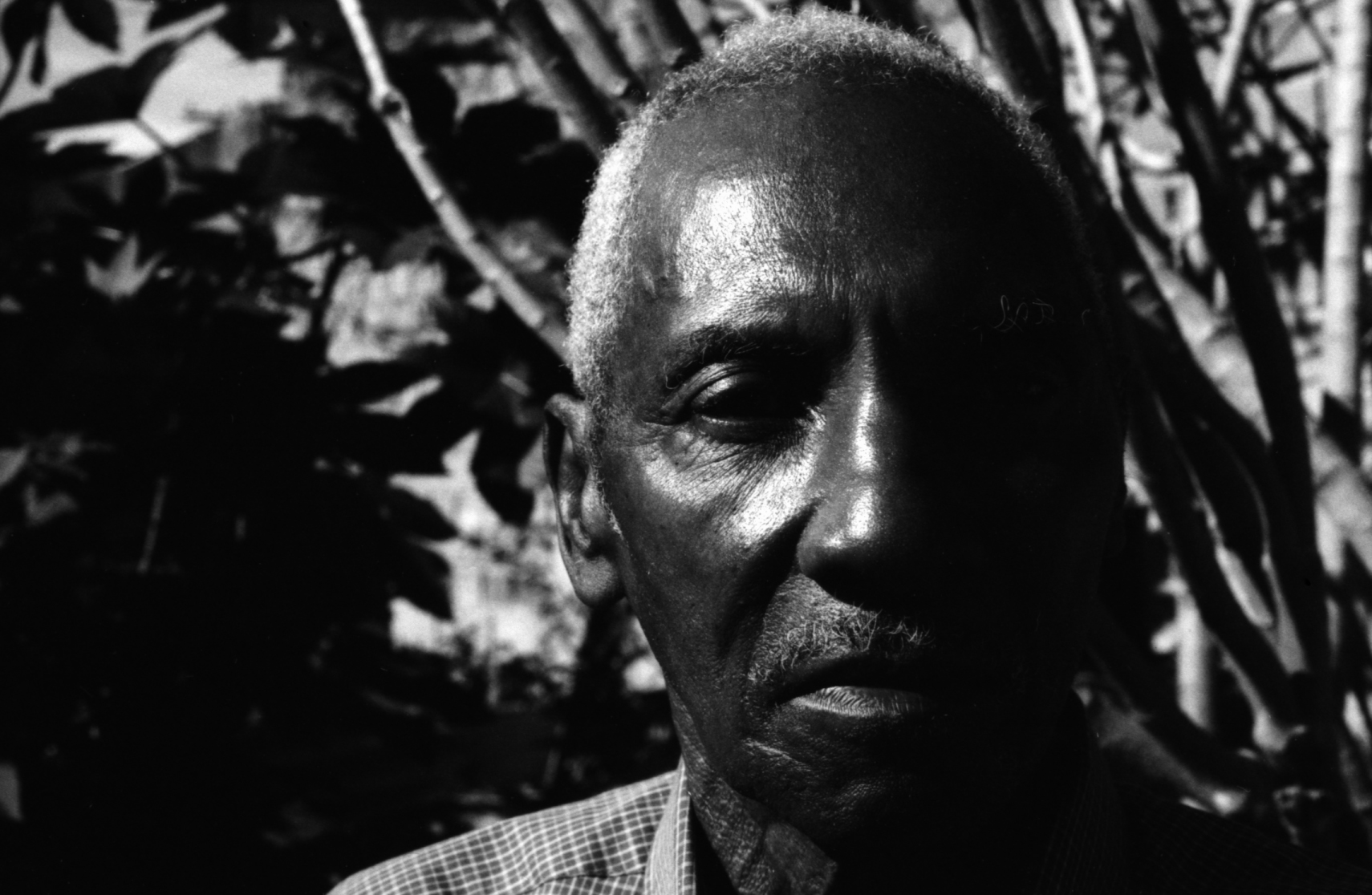
José Elias dos Santos ("Seu Juca"), at home in July 2009 (Ipatinga, MG/Brazil)

Visit: www.silencio63.com

10 years of solitude

Back when I didn’t know who Gabriel García Márquez was, I met Richard M. Morse, who channeled one of his characters. Like the Buendía family patriarch in “One Hundred Years of Solitude”, he did not care much for childhood or children, thinking it to be a less interesting phase in one’s lifespan. Despite his dislike for infants, Morse had even babysat my sister and me a few times, and countless hours of our first year in Washington DC were spent in his home: four levels of a lonely house, filled with books and dust, shelving the stairs up to the attic and down to the basement. Rarely did we go outside and play in the yard. It was cold and weedy. Out of entertaining options, I thus took pleasure in cleaning and reorganizing his messy office. He would come in every once in a while and make sure I wasn’t trashing his library skills and establishing some color pattern based on book covers. I wasn’t. I would also run down to the basement and discover new-ancient junk, which I still love doing. I found pots, garden tools, books, chessboards, and canned food. There was very little for a little girl to do at Morse’s place. When our uneasiness became unbearable to everyone, we’d drive down in his small baby-blue Honda to the deli and get some sandwiches. I didn’t really like them, they were full of celery and mayonnaise, both of which I dislike until this day, but they helped time go by. When I had finally fully explored the familiar four levels of his Foxhall home, I’d sit at the table where he and my mother discussed books and ideas for what felt like unending hours. And, hopeless, turned to writing.

Morse was a very tall man. Tall and somewhat lanky. He was already an old guy by the time our paths crossed, and yet he gracefully moved about the four levels, going up and down stairs, just to find that one quote or book or chapter he wanted to share with friends, and he knew exactly where to find it. He wore prescription glasses, fake teeth that he could pull out, had very large hands and feet and also this long string of hair coming down by his right ear, which he’d fashionably throw over his forehead and rest behind his left ear. It camouflaged his baldhead, and would fall down every so often. My favorite Morse task was, certainly, replacing that bit of hair back where it belonged, restoring his dignity. I then stroked his baldhead, gave it a kiss and thus had some intimacy with this man who was such an unequivocal presence in my childhood and whom I didn’t know, then, thought very little of the infant class I represented. “It’s for the girls”, he’d say while I adjusted his hair, “I let it grow for the girls. They love it!” I giggled, every time, charmed.

Eight years later, Morse died abroad. I hadn’t seen him in years when it happened, and I wasn’t much up-to-date with his health. It was difficult for my mother. A mentor he was to her. I remember the tip of her nose, red from tears and loss. We flew out to DC, my sister and I, to join my mother for memorial services held some 5 months after his passing. Lots of suited men were speaking at the ceremony that took place at a local university, shaking hands, making compliments and congratulating the family for his work. Shortly thereafter, a reception was held at the old place, home to my first cleaning adventures and writing attempts. In truth, it was only when all other options had been explored that I turned to writing, sitting by the two of them, Morse and my mother. There are no copies of what was produced back then. I remember, however, showing it to Morse, not realizing it was when I was most bored that he’d find me the most interesting. I was quieter and, well, I was doing something intellectual, both of which pleased him.

Morse’s place was the same yet different to me. The smell was different. The staircase was book-free, the pile in the bathroom was gone, the boxes in the basement were closed and shelved, the windows were open, the couch linen had been removed, chandeliers and crystals had been made visible, there was a TV set – which, to my surprise, had always been there, and gone by unnoticed -, a tended garden welcomed guests, the fridge was loaded. Something about his four-story home now made it seem so out of place, like ancient architecture turned modern, like a library turned into a franchise restaurant. The sacred element of his intellectual intimacy; his lack of care for how things actually looked like to possible visitors, a certain drive that demanded, in return, that he overlook the pantry, fashion and even his children; it wasn’t there. His smell was gone. His charisma. His drink and cigarette. His sense of humor. His wit. Morse wasn’t there. His home was taken by guests, yet stripped of what gave it life. So strange. How he had managed to populate all of these rooms on his own.

The party was a lively gathering, which would’ve pleased him. There were drinks and Caribbean food. His family was present and loving. We didn’t stay long, but it meant something to us. Four days later, we went silent in front of our also dusty TV set while September 11th 2001 took place. That year was one of closure and beginnings. I was then a freshman journalism major in college, the seeds of the woman I was becoming flourishing not only in my body, but also in my personality – both of which would have appealed to Morse’s aesthetic, or so I like to think. I was in love, truly in love, for the first time. I had forgiven my dad. I read extensively, discovered new authors, new sounds in music, film directors, changes in myself and in the world around me. I had read “One Hundred Years of Solitude” and I knew the Buendía family tree by heart. “This”, I thought to myself with satisfaction, “would’ve been a great time to talk to Morse.” I would appreciate his running up stairs to find that one quote. There’s no sadness or nostalgia in the statement, but rather a sense of accomplishment. I finally dug Morse, and I suspected he would dig me too.

He was the first person I saw when I arrived in the States for the very first time. He picked me, my sister and my mother up at Washington National Airport in his Honda, a messy little corner of the earth, literally no more than means to end, something he couldn’t go around, and that he would, so, accept and practice in his own terms. In it, he drove us back to Foxhall where we were housed for a few days on the top floor of his home at Volta Place. I remember it being very cold up there, it was January and on our first morning, there was snow covering the front lawn. Magical it was, to my sister and me. Morse came slowly up the stairs to wake us up. This happened just a few days before Clinton took office as US president and I was sent to John Eaton Elementary School, in DC, and taught to pledge allegiance to the flag of the United States of America. A couple of months later, I was scribbling my first English poems at Morse’s dining table-turned-into-desk. English was becoming natural faster than I could take it in.

It was only recently, ten years after Morse’s passing, that I was given the delightful task of translating his correspondence with British scholar Leslie Bethell into Portuguese for a book chapter in a compilation my mother and a friend put together to honor his work through the work of other authors. And boy, did I laugh. I had the feeling that I was at last able to understand his word choice and grasp his intelligence, his playful use of words, his graceful and refreshing lack of morals, his self-irony. It was most gratifying. And I am now working on a full compilation of all of his articles not yet translated into Portuguese, a language he rejoiced in and that he so dearly embraced in his many trips and his stay in Brazil.

Morse gave me a book as a child that has been sitting in my old bedroom, at my mother’s place. When I first showed it to her, she admitted to never knowing Morse had given me that present, and that it meant a lot to have been given a book from his private collection. Not only that, but the first book ever given to him by his father, in the 1920s, who, alongside his mother, a strict woman, pushed little Dickie Morse to skip grades at age 7 so no time was wasted with lower minds. “A Children’s History of the World”, by V. M. Hiller (headmaster of Calvert School, 1924) still sits in my old bedroom’s bookshelf, close to Gabriel García Márquez and “Morse Code”, with my translation of his correspondence in it.

Almost twenty-years earlier, he had been the first to tell me about Morse code, bragging about his name, and leading me to believe his games. I have a picture of that day, at our place, where Morse seldom came. Between fixing his hair, sharing my scraps of childish poems, buying celery sandwiches, organizing his books and, above all, having been given that book as a present, Morse and I overcame a large age and cultural gap and, in our own respectful manner, became friends. Almost two decades later, I still discover fragments of memories I have from those early years, and new ways through which Morse has influenced, inspired and affected my family and me. In my dreams, I like to think his perspective on children came out transformed by this encounter. In my fantasies, I was the child that made him tick.

In loving memory of Richard M. Morse (June 26th 1922 – April 17th 2001)

Otto

Predictability. It’s the greatest asset an individual may have. I can’t stress enough how much I appreciate predictability. It leads to punctuality. To boring. I like punctuality. It makes me feel safe. Although I appreciate a surprise once in while, I prefer playing with routine. And it’s only within a strict and rather boring routine that we’re able to recognize and appreciate a surprising event. And thus I’m back to predictability. It is the key to everything.

The Man and the Lady are predictable. I live with them. I’m thrilled about our rituals. At 6am, I wake up and start scratching the bedroom door. It’s not really shut, so I throw my weight over it and the handle clicks. They’re not yet awake, but that’s about to end. I jump on the bed, on her side. She sleeps next to the wooden box with all the small nice smelling candles and that pile of books. He’s next to the window, on the other side of their gigantic bed, and I’m less thrilled to crawl over him since he doesn’t grace my arrival with the same respect it deserves and because he’s to blame for everything that’s been happening between her and me. She usually makes me feel like the king I am. Or prince, I should say, since I’m still 1. She normally smiles and runs her fingers around my ears before doing the same to him, which I don’t appreciate at all, and whispering “It’s ok, I’ll go, you sleep on”. Yeah, you sleep on, we don’t need you. Today, however, this doesn’t happen. No royal treatment, no smiles and definitely no cuddling.

I can take a hint, ya know. I race to the kitchen and wait for her by the bowl, where she pours my favorite breakfast treats, the only ones I ever eat. Today, shockingly, she serves me that nasty pale looking grub that Oliver next door gets from the macrobiotic woman that feeds him. I should’ve seen it coming… The pouring lingers, each beige flake bouncing against the bowl, in slow and torturing motion. I’m disgusted. It’s true that I like it when she watches me do whatever it is I’m doing, especially eating. It’s in my animal nature to be needy. But now I don’t mind that she leaves me alone for a minute to go brush her teeth and get changed. I’m busy drooling over the bowl – not eating its contents – and bringing the grub to waste. I won’t eat it and no one else should. Before she gets back, I trot across the living room to pee on the plant next to the TV set and proudly state my point. This has been known to work in the past and for park buddies as well.

I’m ignored for most of the day. He walks around the house in PJs, scribbling notes and sometimes talking to himself, while she’s gone. I enjoy this moment of solitude and chase birds in the yard, roll on the grass to scratch my back, bark at strangers walking by our front door and nap on the couch while no one’s there to see. The afternoon goes by in a flash as is normally the case and she punctually slides the key in the keyhole early in the evening, bringing peace to my inner sense of time. She’s back. We take our evening walk before sitting down to watch TV shows together, me on the floor, leaning my chin against her knees and thighs. During commercial breaks, she gets up and I either linger on or chew on a shoelace I’ve hidden under the couch. When the TV is clicked off, she goes back to the bedroom, closing the door on me, and just before I’m shut out from their evening, I get a glance of the Man, in bed, still scribbling, welcoming her in his arms. It’s more than I can bare.

The tyranny of the Man lasts too long now. Why does he get all the warmth and affection these days? I am the loyal one, every single day licking her toes when she comes dripping out of the shower. I’m the one pushing my nose into her hands when she’s lost in thoughts or chasing my own tail when I sense she’s bored. Why am I to blame? He’s the fat one. I’m as slim as race dog, although I’m more of a tramp, myself. Of course he’s the one stealing cake from the fridge, not me. How would I even open the fridge door? I know I’m ingenious and clever, I’m flattered by the compliment in form of reprimand that the Lady has been giving me in daily doses, but I must refuse authorship for the midnight snack-attacks. Believe me, I know it’s him. I sleep closer to the kitchen, I see him come by at night and I also see the reflection of the fridge light on his prescription glasses. This twilight ritual always repeats itself at the same time, every night, when the clock bell rings, striking some dead hour no one’s supposed to acknowledge. A dead hour the Lady ignores in her sleep and which I would normally do too if it weren’t for the fat one or an occasional ambulance siren storming up the road, blasting through the walls and stirring herding instincts in my gut. It feels like I’m being called by my clan, back to the wild. It’s ephemeral, though, and I go back to my normal domestic self. I truly don’t know what takes over me… it must be something very primitive.

When the Man flicks on the kitchen light switch, I, in canine alertness, raise a stiff neck and shake a threatening black-spotted tail, playfully hitting it against the wooden floor. He shooshes me down and I acquiesce, awaiting his departure. He leaves crumbs behind, which I instinctively eat, unwillingly covering up his tracks. Over and over we repeat this ritual of ours. The following morning, there are never any traces to be found on the floor, thanks to your dumb narrator. What comes next anyone can foresee. My prints are all over the place. You don’t need forensics to figure that one out. Can you blame her? I can’t. I blame him.

I decide to react. I take pride in my half-Dalmatian intelligence and stamina. It takes all of the strength in me to look away from that yellow brick road where chunks of chocolate chip cookie dough pave the way from kitchen to bedroom, my own stairway to heaven. Don’t do it! Don’t do it! I shiver and moan, I feel excruciating pain, I drool while mechanically getting up, laying down, getting up, laying down, before finally rushing down the hall, desperately licking the floor in search for bits of crumbs, wagging my tail in every direction and filling myself with satisfaction, no guilt. I head back to my cushion by the counter, I circle around it once or twice before embracing absolute comfort, and go back to sleep. A satisfied sleep. Predictable; I am, that is.

6am. I jump up, walk around in a circle, silently walk to the bedroom and jump up on the bed. I sniff her hair, and she greets me with honest satisfaction. And him… well, he’s still asleep. We get up together and are happily heading towards the bowl when she freezes by the kitchen door. I’m still here, I’m still here, lets be happy!, I’m screaming in doggy stare. I follow her stare now and there it is. The fridge door is open. I duck and wait my punishment, unfair but certain punishment. Cake glaze is spread over the floor and the plate in which it once stood is empty. Ears down, tale still, I await severe reprimand, yet hear none. Instead, she leaves my side and walks back to the bedroom. She stops at the door and slightly pushes it door open, just enough to see him asleep. A mountain of flesh and hair, he sleeps heavily, breathing loudly. She looks at him, both sad and worried, not moving a muscle. When her right hand drops next to her hips, I already know my lines for the next act. I humbly walk up to her, lean against her leg, and await a friendly pat on my head. Surely enough, I get what I want. Predictably. Everything is in its right place.

Today will be a great day. It will be like any other day in Otto’s life.

Svannah, my roommate in LA, an inspiration to this tale...

Hitching a gang-ride in Benin

Alice Traoré, Maria Bitarello & Camille Barrat

Cars in Benin, Africa, are communal means of transportation. Motorcycles, we see thousands of those: taxis, delivery and pick up, three family members crowded in one of them, the whole lot. But not cars. There aren’t any in the streets, only in the fringes of town, improvised bus stations where car owners and ride seekers unite under a tree and wait. There’s no departure time, no destination established, no precise number of passengers determined. So we wait. For more people, for the right people, headed in similar directions. Payment is like gambling. There’s always an understanding in the end, and no matter how much of a bargain you think you’ve come across, the house always wins. Finally, there are 12 of us. In one car. Four up front, five in the back and three in the trunk, including myself. I see kids, bags, chickens. On top of us, strapped around the hood, bags of crops, seeds and a couch. The wheels give in and we’re running inches above the ground. Nothing works on the control panel. All lights are off, no windows, doors barely shut, only a non-stop horn blows away for the four hours it takes us to drive 100km south, from Kétou to Cotonou, over a red dusty road. As we arrive at the economic capital, I look for a place to change into my outfit before heading into the airport, for what I was wearing in the car is now beyond public exposure. I look like I survived a mine explosion and have just walked out alive. Dressed in better attire, I board the airplane to leave.